You've been doing everything right.
You check job boards every morning. You apply consistently. You've updated your resume. You've optimized your LinkedIn profile.
And still — silence.
No interview calls. No responses. Just automated rejection emails — or worse, nothing at all.
If this sounds familiar, you're not alone — and you're not the problem.
Last month, a client came to me completely stuck.
"Raj, I've been applying for 9 weeks. I've sent over 70 applications. I've had 3 responses. Two rejections. One ghosted."
8 years of IT experience. Solid resume. Active on LinkedIn. Real, in-demand skills.
So I asked him one question.
"How many of your LinkedIn connections have you actually reached out to?"
He paused.
"Maybe… three?"
He had 600+ connections sitting right there.
That was the problem.
Not his experience. Not his resume. Not his LinkedIn profile.
His strategy.
The Hidden Asset Most Job Seekers Never Use
Here's a number worth understanding:
Referred candidates are 4x more likely to get hired than someone who applies through a job board.
Not because they're more qualified.
Because someone on the inside already vouched for them.
The hiring manager's risk drops. The resume goes to the top. The interview gets scheduled faster.
And here's what makes this even more powerful — you don't need to know the hiring manager personally. You don't need a best friend at every company. You just need one connection on the inside who can put your name forward.
That person is almost certainly already in your LinkedIn network.
You just haven't found them yet.
Why Most People Don't Activate Their Network
It's not laziness. It's not a lack of effort.
It's that they don't know where to start.
600 connections feels overwhelming. Who do you message first? What do you even say? Will it come across as desperate or awkward?
So they do nothing — and go back to clicking Easy Apply.
Here's what actually happens when you rely entirely on job portals:
- Your resume stays generic and untailored
- Your ATS match score stays low
- You get filtered before a human ever sees your name
- You compete against 300–500 applicants for every role
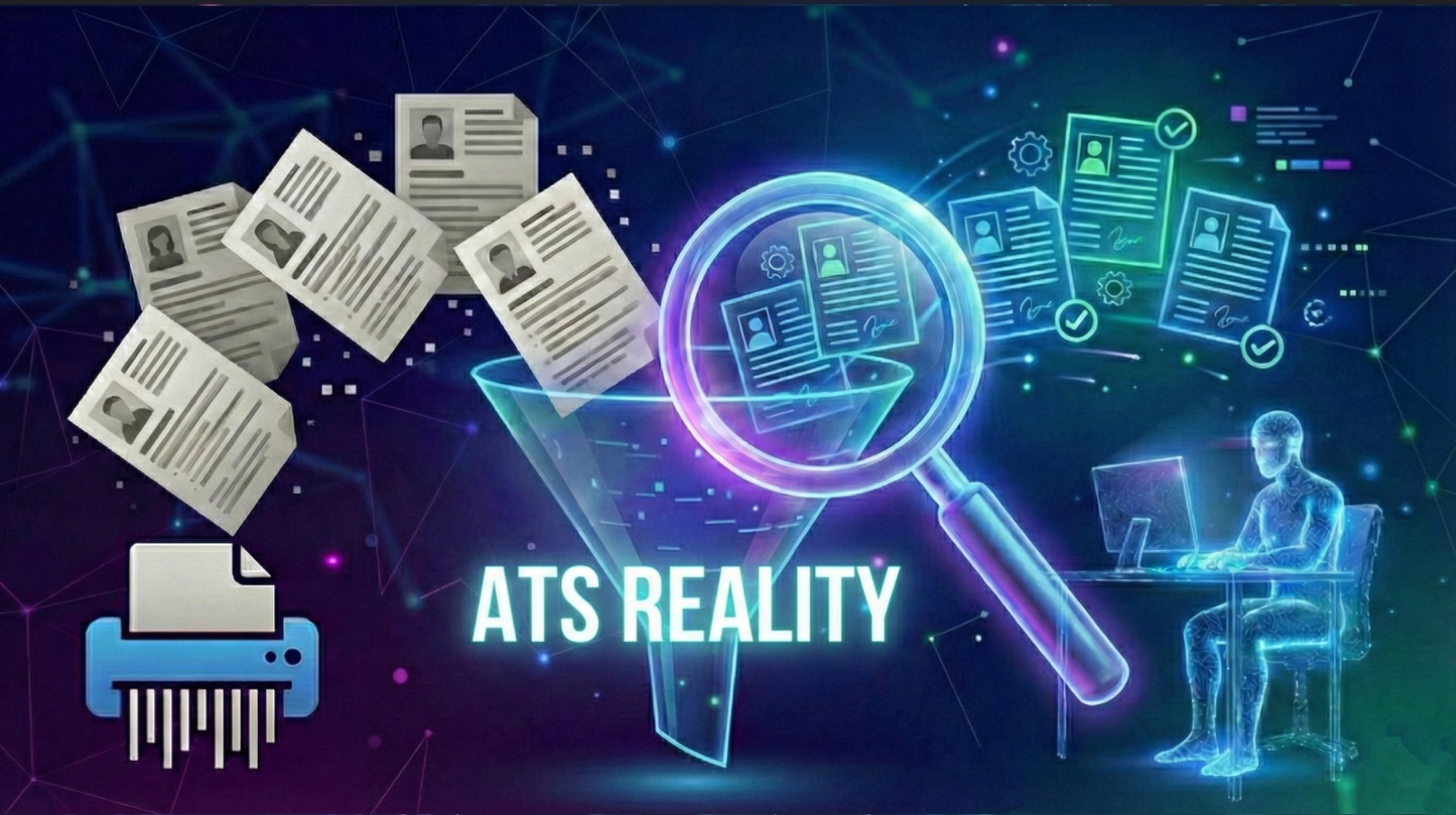
In most companies today, your resume is screened by software before a recruiter ever sees it. If it doesn't match the keywords and structure the system is looking for, it gets filtered automatically.
70 applications. 3 responses.
The problem is not your experience. The problem is the strategy.
Applying vs. Activating — This Is the Shift That Changes Everything
Most job seekers are applying. Very few are activating.
Applying = filling out forms, submitting resumes, and waiting for something to happen.
Activating = turning your existing connections into real conversations, referrals, and opportunities.
One is passive. One is strategic. And they produce completely different results.
I worked with a Project Manager — 11 years of experience, strong background in enterprise IT delivery — who had been applying for 7 weeks with almost no response.
We didn't rewrite his resume.
We mapped his network instead.
Here's what we found hiding inside his existing 600+ LinkedIn connections:
- 14 people in the same or similar PM roles — people who could refer him internally and understand his value immediately
- 190+ cross-functional allies — developers, QA leads, business analysts, product managers who work alongside PMs every day
- 18 recruiters and Talent Acquisition professionals — already connected to him, never contacted
Here's what happened next:
- Week 2 → first outreach sent to 6 people
- Week 3 → two genuine conversations started
- Week 5 → one internal referral submitted at a target company
- Week 6 → interview scheduled
Same person. Same experience. Same profile.
Different strategy. Completely different outcome.
The 3-Category Network Map
Before you can activate your network, you need to see it clearly. Most people think of their LinkedIn connections as one big undifferentiated list. That's why it feels overwhelming.
The fix is simple: sort every connection into one of three categories.
Category 1 — Twins
These are people in the same or very similar role as you.
If you're a Business Analyst, your Twin is another BA. If you're a Project Manager, your Twin is another PM or Program Manager.
Twins are your strongest referral advocates because they understand your value immediately. They know what the role requires. They know how to speak to your strengths internally. And they're most likely to know when their company is hiring for someone exactly like you.
Category 2 — Siblings
These are your cross-functional allies.
If you're a BA, your Siblings are QA Analysts, Developers, Product Managers — people who work closely with your role on a daily basis.
Siblings hear about openings before they're posted. They can vouch for you with the hiring team. And because they're not in direct competition with you, they're often very willing to help.
This is the most underutilized category in most professionals' networks.
Category 3 — HR & Talent
These are the recruiters and Talent Acquisition professionals already sitting in your connections.
Your direct pipeline to open roles — and most people don't even realize they're connected to them.
A warm message to a recruiter you're already connected to is infinitely more effective than a cold application submitted through a job portal.
Introducing Referral Engine — I Built This for You
Mapping your network manually takes hours. That's why I built Referral Engine.
Referral Engine is a web app that takes your existing LinkedIn connections and uses AI to classify every single contact into those three categories — Twins, Siblings, and HR & Talent — in under 5 minutes.
The entire setup is simple:
- Export your LinkedIn connections file (takes 2 minutes)
- Upload it to Referral Engine
- Define your current or target role
- Your complete network map is ready instantly
When you can see that you already have 18 peers in similar roles, 200+ cross-functional allies, and 21 recruiters in your network — the job search feels completely different.
You're not starting from zero. You already have leverage. You just needed to see it.
What Referral Engine Does Next
Once your network is mapped, two AI-powered tools do the heavy lifting.
Outreach Helper
Most people freeze when it's time to reach out. They don't know what to say, so they say nothing.
Outreach Helper solves that. Select your scenario — reconnecting with a former colleague, requesting an informational interview, cold outreach to a recruiter — and get three professionally written, personalized messages tailored to that person's specific title and company.
Copy. Customize slightly. Send.
Referral Kit
When you're ready to ask for a formal referral, Referral Kit generates a complete package for you. Provide the job title, the posting link, and a short summary of your experience. Referral Engine produces:
- A LinkedIn message your contact can send to the hiring manager
- An email template for a more formal introduction
- An internal blurb your contact can paste directly into their company's referral system
You make it as easy as possible for someone to refer you. Lower friction. Higher results.
What "Better Outreach" Actually Looks Like
Most people either don't reach out at all — or they send a generic message that gets ignored.
Here's the difference:
❌ Weak Outreach
"Hi [Name], hope you're well. I'm looking for a new PM role. Would you be able to refer me if anything comes up?"
✅ Strong, Personalized Outreach
"Hi [Name] — it's been a while. I've been following what the team at [Company] has been building — looks like a great space. I'm currently exploring senior PM opportunities focused on enterprise delivery. If there's ever a conversation worth having, I'd love to reconnect. Open to a quick 15-minute call?"
Same intent. Different execution. One gets ignored. The other starts a conversation.
You're not asking for a favour. You're making it easy for someone who already knows you to help you — if the fit is right.
How to Get Started with Referral Engine
Your LinkedIn connections export is all you need to begin.
- Step 1: Go to LinkedIn Settings → Data Privacy → Get a Copy of Your Data → Connections. LinkedIn will email you the file within minutes.
- Step 2: Go to Referral Engine and upload your connections file.
- Step 3: Define your current or target role. The AI maps your entire network instantly.
- Step 4: Use Outreach Helper to start 5–10 conversations this week with your highest-value connections.
- Step 5: When you're ready to ask for a referral, use Referral Kit to make it effortless for your contact.
That's the system. It's not complicated. But it works — because it's built on real relationships, not algorithms.
Quick Reality Check — Do This Today
Look at your LinkedIn network right now and ask yourself honestly:
- How many of your connections are in the same or similar role as you?
- How many are cross-functional allies who work alongside your role?
- How many are recruiters or HR professionals you've never messaged?
- When did you last have a real conversation with anyone in your network?
If the answer to most of these is "I don't know" or "a long time ago" — you've just found where your interviews are getting lost.
It's not the job boards. It's not the algorithm.
It's the network you already have — sitting unused.
The Bottom Line
You don't need more connections.
You need to activate the ones you already have.
The job market in 2026 is competitive. Applications are up. ATS filters are stricter. Response rates on cold applications are lower than ever.
But referrals still work exactly the same way they always have.
Someone vouches for you. The risk goes down. The resume goes to the top.
The only question is whether you have a system to make that happen — or whether you're leaving it to chance.
Referral Engine gives you the system.
Not the person who applies most.
Not the person who waits longest.
The person who activates their network deliberately…
gets the referral.
gets the interview.
gets the offer.
What To Do Next
If you're actively job searching right now:
- Step 1: Export your LinkedIn connections today — it takes 2 minutes.
- Step 2: Upload to Referral Engine and map your network — takes 5 minutes.
- Step 3: Identify your top 10 Twins and Siblings and send your first outreach this week.
- Step 4: If you want help building your full outreach strategy, book a coaching session and we'll build it together.
→ Try Referral Engine free here
📞 Not Getting Interview Calls?
Your network might be the missing piece — not your experience.
- ✔ Map your existing LinkedIn connections in minutes
- ✔ Identify your strongest referral advocates
- ✔ Get personalized outreach messages ready to send
About the Author:
Rajinder Kumar is a Certified Career Coach and IT Project Manager specializing in helping mid-to-senior level professionals in North America and India land better roles and higher salaries. Over the past 4 years, he has helped 2,000+ IT professionals land quality interviews within 90 days. He is also the creator of Referral Engine — an AI-powered networking tool built for job seekers navigating today's market.